Connect with us

News

Separation Is Not Divorce: Cohabitation Is Not Marriage

Published

on

On April 26, 2020, Nigeria lost Dr. Tosin Ajayi, founder and Chief Executive Officer of First Foundation Hospital, one of the country’s most respected private healthcare institutions. His passing was mourned nationally. But within weeks, mourning gave way to litigation.
What followed was not a dispute over medical legacy, but over a much older, unresolved matter: marriage. For the next five years, two women, their children, and the entire Ajayi estate were locked in court. The core question was deceptively simple: Who, under Nigerian law, was the legal wife?
The answer, delivered on March 13, 2026 by Justice Oluwayoyin Odusanya of the Lagos High Court, has now become a national case study. It is a verdict that restates, with painful clarity, a principle many Nigerians misunderstand: Separation is not divorce. Cohabitation is not marriage and sentiment has no weight in probate court.
The Facts: A Marriage Never Legally Ended
Dr. Ajayi had separated from his first wife many years before his death. They lived apart. They built separate lives. To neighbors, friends and even to Dr. Ajayi himself, the marriage was “over,” but no petition for dissolution was ever filed. No decree nisi was granted. No decree absolute was issued under the Matrimonial Causes Act, Cap M7, Laws of the Federation of Nigeria 2004.
Believing the union was effectively dead, Dr. Ajayi entered into another relationship and later married a second woman. He had children with her. She managed his home. She was presented socially as “Mrs. Ajayi.” For all practical purposes, she was the wife.
When Dr. Ajayi died intestate without a will both women came forward. The first wife returned to claim her position as legal spouse and administrator of the estate. The second woman countered, “Over my dead body. You abandoned him for years and only reappeared after his death to claim what you left behind.”
The Judgment: What the Court Actually Decided
After five years of evidence, arguments, and legal submissions, Justice Odusanya delivered a judgment that dismantled three common myths:
Myth 1: “Long separation ends marriage.”
The court held: “Separation, regardless of how long it lasts, does not automatically dissolve a legally valid marriage under the Act.” Under Section 15 of the Matrimonial Causes Act, only a court can dissolve a statutory marriage. Separation may prove “irretrievable breakdown,” but it is the judge’s decree, not the passage of time, that terminates the marriage.
Myth 2: “A registry wedding cures everything.”
Evidence showed the second woman was herself legally married to Mr. Davies at the time she allegedly married Dr. Ajayi. The court ruled that her purported marriage to Dr. Ajayi
was void ab initio void from the beginning. Section 47 of the Matrimonial Causes Act states that a marriage is void if either party is already lawfully married. Nigerian statutory marriage is strictly monogamous: one man, one woman. No exceptions.
Myth 3: “Children from the second union will protect her rights.”
The court affirmed that while all children of Dr. Ajayi, whether born within or outside the statutory marriage, are entitled to share in the remaining two-thirds of the estate under the Administration of Estates Law, the second woman herself had no spousal rights. She could not apply for Letters of Administration. She was not entitled to the statutory one-third share reserved for a legal spouse.
Final Orders: The first wife was declared the only legally recognized spouse. She is entitled to one-third of Dr. Ajayi’s personal estate and is the sole person entitled to apply for Letters of Administration. The rest of the estate will be divided among all of Dr. Ajayi’s children.
Why This Matters Beyond One Family:
This judgment is not about Dr. Ajayi alone. It exposes a systemic legal blind spot in Nigerian society:
A. The Monogamy Rule is Absolute
Unlike customary law, which permits polygamy, statutory marriage under the Act is monogamous. A man cannot be “traditionally married” and then “add” a statutory wife. A woman cannot be “customarily married” and then “upgrade” to a registry wedding while the first marriage subsists. The second ceremony is legally meaningless.
B. Customary Divorce Statutory Divorce
Many Nigerians believe that “returning the bride price” or “family settlement” ends a marriage. For customary marriages, that is correct. But if you later contract a statutory marriage, you must also obtain a statutory divorce. The two systems do not automatically talk to each other. Failing to divorce under the Act means you remain married in the eyes of every bank, court, and probate registry in Nigeria.
C. Intestacy Punishes Poor Planning.
Dr. Ajayi died without a will. Under Lagos State’s Administration of Estates Law, an intestate estate is distributed by formula: 1/3 to the legal spouse, 2/3 to the children. A well-drafted will could have made specific provisions for the second woman and her children, reducing litigation. Without a will, the law, not the deceased’s intentions, decides.
The Hard Lesson for Women and for Men
To women: “This case vindicates every warning about marrying a married man under the Act.” No matter how long you cohabit, no matter how many children you bear, no matter how “official” your wedding photos look, if his first marriage was never dissolved by a court, you are not a wife in law. You are a partner, a companion, a mother of his children, but not a spouse with inheritance rights. When death comes, the court will be clinical. Ignorance of the law is no excuse, will sound less like a maxim and more like a sentence.”
To men: “You cannot move on emotionally and legally at different speeds. If your marriage has broken down, do the hard work of obtaining a decree absolute. Until then, every new relationship you formalize is built on legal quicksand. You risk leaving your children and your partner with nothing but litigation.”
Three Protective Steps Everyone Must Take Today:
A. Verify Before You Marry: If a suitor says “I am divorced,” do not accept separation agreements or affidavits. Insist on seeing a certified true copy of the Decree Absolute. It is the only document that proves the first marriage is dead in law.”
B. Dissolve Properly Before You Remarry: “If you are customarily married and want a registry wedding, first dissolve the customary marriage under native law and custom, obtain evidence of that dissolution, then proceed. If you are statutorily married and want out, file a petition. Separation for 20 years still requires a court order.”
C. Write a Will, No Matter Your Age or Status: “A will is not for old people. It is for anyone with assets and dependants. A will allows you to make specific provisions for all your children and even for long-term partners, within the limits of the law.
Without it, the state’s formula overrides your wishes.
Let the Courtroom Be Your Teacher, Not Your Destination
Dr. Tosin Ajayi’s children will inherit. His hospital legacy continues. But the woman he lived with for years will not inherit as a spouse. That is not cruelty. That is the law.
Let this editorial serve as the warning that casual advice could not deliver. Before you say “I do,” ensure his “I do” from the past has been legally converted to “I don’t” by a court of competent jurisdiction.
In estate matters, the courtroom does not interpret intentions. It interprets documents and the only document that ends a marriage is a Decree Absolute. Everything else is just separation.”

Continue Reading
Click to comment

Leave a Reply

Your email address will not be published. Required fields are marked *

News

No Shame in Being a Girl- Group Captain Rakiya Omar (Rtd) and the Promise She Made to 1,000 Girls

Published

on

By

By Halima

At 80, a retired Air Force medical officer turned a quiet subject into a loud act of love. The President of Steron Group put dignity into the hands of girls in Wasa and Takushara.

The most important things, Group Captain Rakiya Omar (Rtd) told the gathering, are often spoken softly. A mother’s prayer. A teacher’s patience. A girl’s quiet hope that tomorrow will be kinder than today.

It was a fitting place to begin. On Sunday, 4 October 2026, at Wasa IDP Camp and in the neighbouring communities of Wasa and Takushara in Abuja Capital Territory, one of the quietest subjects in any society, the one girls are taught to whisper about, to hide and to endure alone, was spoken about aloud. It was spoken about with warmth, without apology, and with a gift in hand.

By the end of the day, 1,000 reusable sanitary pads had been placed in the hands of girls and young women: 500 at the camp, and 500 across the Wasa and Takushara communities. Each pad was small. Together, they said something very large.

The girl in the speech

Group Captain Omar asked her audience of women leaders, teachers, volunteers and girls, to picture someone. A girl of 12, 14 or 16 years. She has dreams, “as wide as the sky over Abuja”. She wants to sit in her classroom, raise her hand and answer the question. But once every month, her body does what the body of every woman has done “since the first sunrise”, and she is told to be quiet, to hide, to stay home.

“She is made to feel,” the President said, “that something natural is something shameful.”

Many girls across Africa will recognise her, because she is them. Period poverty, the lack of money, supplies or safe information to manage menstruation with dignity, seldom makes headlines. It does not arrive with noise. It arrives as an empty desk, a missed lesson, a silence at home carried month after month by girls who have done nothing more than grow up. For girls who have also lost homes and routines, as many in a camp for displaced people have, the weight can be heavier still.

“There is no shame in being a girl.”

Her answer was tender and unwavering. There is no shame, she said, in “the rhythm of the moon that lives inside you”. It is not a weakness. It is the sign of a body made to carry life, to nurture it, and to bring it into the world. Every great doctor, teacher, mother and leader the nation has known, she reminded them, came into the world through that same gift.

A woman of the Corps

The message was gentle, but the messenger carried decades of authority. Group Captain Omar spent many years in the Medical Corps of the Nigerian Air Force. She wore the uniform, she told the gathering, but her real work was always the same: to stand beside someone on the hardest day of their life and tell them, without a single word, that they were not alone.

In the wards, she learnt that a bandage is not only cloth, and a medicine is not only a dose. “Sometimes the strongest medicine is dignity.”

That conviction became the thread running through her keynote: “A woman who is treated with dignity heals faster. A girl who is treated with dignity grows taller. A community that guards the dignity of its daughters rises as one.”

At 80, she has not retired from service. She has simply changed its form. The Corps had a saying, “Service comes before self”, and she carries it still. It, “does not leave a woman when she takes off her uniform”, she said. “It only changes shape.” Today, service looks like “a sanitary pad placed gently in the hand of a girl, and a word of truth spoken kindly beside it.”

Not charity. A promise.

The STERON Dignity Project focuses on menstrual health, hygiene and economic empowerment, and it is led through the Steron Community Development Foundation (SCDF), which she co-founded and leads as president.

She is particular about one distinction. “The STERON Dignity Project is not charity,” she said. “It is a promise.” A promise that no girl will miss her lessons for lack of a simple pad. That no girl will lower her eyes in embarrassment. That no girl will ever be asked to choose between her education and her dignity.

Every one of the 1,000 pads shared was reusable, made to be washed and used again, so that protection does not have to be bought afresh every month. For a family stretching every naira across many needs, that matters. It can be the difference between a girl staying home and a girl staying in class.

A son who stands behind her

Every great initiative has someone at the front. Many also have someone quietly holding the door. Here, that person is her son, Abubakar Sadiq Omar, mni, Managing Director of Steron Group.

He is, quite simply, and a strong “He for She”: a man who understands that the dignity of women and girls is not a women’s only issue, but a human one. He supported his mother massively in this project, giving it the full weight of his backing, and it showed.

It is a pattern in Steron’s work with its host communities. In August, he personally planted 20 of the 100 seedlings in the Befriend a Tree exercise at Wasa and Takushara. From trees in August to pads in October, the same conviction runs through both: that a company’s responsibility does not end where its operations do, and that those who host its work deserve to be cared for.

There is something quietly moving in the picture: a woman of 80 building a promise for girls, and her son making sure the promise can be kept. A mother and a son, decades apart in life, but united by the belief the president put into words herself: “humanity is measured by how we treat the ones who have the least voice.”

To the girls, and to the rest of us

Her speech was not only for the girls, though they were its heart. “To the girls here today,” she said, “you are not forgotten. Whatever you have lost, whatever you have been through, your worth has never been in question. You are a daughter of this land, and this land owes you its care.”

She also left a stern message for the mothers, the elders, the leaders and the men present:. “You are the walls that shelter these daughters. Speak to them openly. Teach them without shame. Stand behind them when the world is slow to understand.”

“If we honour our girls, we honour ourselves. If we protect their dignity, we protect the future.”

She thanked her team at the Steron Community Development Foundation, the partners, Dr Ramatu Dikko and every volunteer who gave their time. “You have made a promise real,” she told them. And she closed with a prayer:  Allah should bless every girl there with health, with courage and with a future as bright as her smile.

“Let a girl in Wasa, a girl in Takushara, and a girl in this camp know,” she said, “that Nigeria has not looked away.”

On 4 October, 1000 times over, in a small and gentle act, the girls were told exactly that. And that message was delivered softly. The project was part of Steron’s End Poverty Project.


Continue Reading

News

108-Year-Old Delaware Woman Renews Driver’s License Until 2033, Shares Her 5 Rules For Longevity
Published

on

By

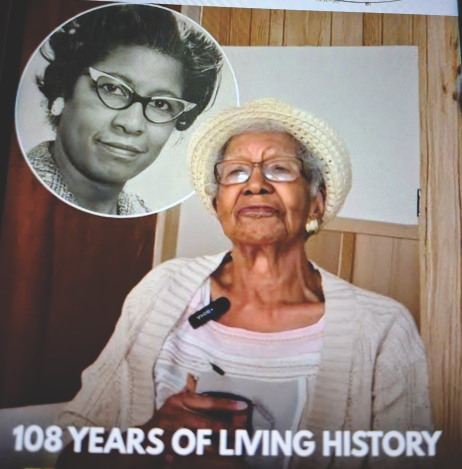
Susan Young Browne is 108 years old, and she still drives herself to the grocery store. Behind the wheel of her blue Subaru, the Dover, Delaware, resident navigates her city with the confidence of someone who has been driving for over 80 years. She recently renewed her driver’s license, which will remain valid until 2033 the year she turns 115.
“In order for me to go to the store, I have to drive,” Browne says. “Anywhere I want to go, I have to drive. I’m an experienced driver. I try to be very careful.”
Her independence extends far beyond the driver’s seat. Browne has lived in the same house for more than seven decades, handling her own daily affairs.
Born on April 24, 1918, in Lincoln, Delaware, Browne grew up on a farm without running water or electricity alongside nine siblings. She attended a segregated elementary school and decided early on that she wanted to teach.
Because local public high schools did not admit Black students at the time, her family paid for her to attend Delaware State College High School. She went on to graduate from Delaware State University in 1945, and today, she is the institution’s oldest living alumna.
Browne taught elementary school for 30 years, beginning her career in a one-room schoolhouse, and helped her first husband run a bus business before retiring in 1977. Now, surviving on just a single daily blood pressure pill, she credits her exceptional health to five straightforward principles.
Move Every Single Day. Browne skips the cane and walker entirely. Her secret lies in a daily morning mobility routine.
Each day begins on the floor. She spends 10 minutes stretching, building strength, and practicing her balance. Afterward, she stands against a wall to perform targeted leg exercises.
Susan Young Browne performing her daily stretching and balancing routine at home. “She does things I can’t do,” her son, Jim Young, admits.
“I can move better than he,” Browne fires back.
Beyond her living room stretches, she drives herself to the Modern Maturity Center in Dover three days a week to participate in chair dancing classes.
Eat Clean, With One Exception
A lean diet keeps Browne’s engine running. She relies heavily on chicken and fresh fruit, specifically apples, peaches, and blueberries.
Breakfast usually consists of a frozen waffle, cranberry juice, and a cup of black coffee. She completely avoids alcohol and steers clear of heavy fried foods.
“Of course, I like them, but I know I shouldn’t eat them, so therefore I don’t eat them,” Browne explains.
She also cuts out sugar, making only one exception: her signature homemade 7UP cake, baked specifically for family gatherings.
The famous 7UP cake Browne bakes as a rare sweet treat for her family.
Her routine is reinforced by strong genetics. Her daughter, Lynnette Young Overby, notes that longevity runs in the family; Browne’s sister lived to be 103.
Demand Independence
Browne outlived two husbands and made a firm decision never to marry a third time.
“That’s right. I am not taking care of another man,” she says. “I decided when I was left alone that I didn’t need anybody to take care of me, I take care of myself.”
Living alone and driving her own car are non-negotiable terms for her lifestyle. Overby notes that her mother is fiercely determined to maintain this self-reliance for as long as humanly possible.
Keep Your Mind Busy
A sharp mind requires constant maintenance. Browne fills her quiet hours by reading romance novels and solving word puzzles.
She relies on a pocket calendar to keep her active social life meticulously organized.
– By Kevin Van Paassen

Browne sitting surrounded by friends and family members at her 108th birthday celebration.
Her community ties remain incredibly strong. She attends church regularly, socializes at the senior center, and remains an active life member of the National Sorority of Phi Delta Kappa Alpha Pi Chapter.
Never Stop Exploring
Throughout her life, Browne prioritized travel. When Alaska and Hawaii officially became U.S. states during her teaching career, she made a point to visit both. She traveled to Alaska twice and toured international destinations including Spain, Portugal, and Brazil.
Out of everywhere she has stamped her passport, her favorite destination remains Hawaii, simply because “it’s beautiful there.”

-Kevin Van Paassen has a deep-rooted background in Canadian media, photography, and strategic communications, my goal is to bring you stories that matter.

capturing the true essence of modern Canada—from breaking news to everyday lifestyle.

Continue Reading

News

National Association Of Akpabuyo Students Worldwide Gets First Female President

Published

on

By

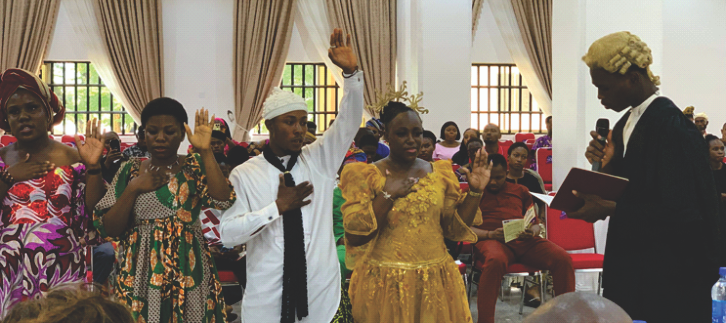
On July 8, 2026, the National Association of Akpabuyo Students Worldwide (NAAS Worldwide) recorded a significant milestone in its institutional history with the successful inauguration and swearing-in of Comrade Deborah Effiong Bassey as the first female President of the Association.

The inauguration ceremony attracted a broad spectrum of participants, including sons and daughters of Akpabuyo from across Cross River State and other parts of Nigeria. The event also witnessed the attendance of students representing various universities, polytechnics, colleges of education and other tertiary institutions, demonstrating the association’s widespread reach and the collective commitment of its members to progressive student leadership.

The emergence of Comrade Deborah Effiong Bassey as the first female President represents a landmark achievement in the association’s democratic journey. It reflects the growing recognition of inclusive leadership, gender equity, and the increasing participation of women in student governance and decision-making processes.
Her inauguration serves as an inspiration to young women and underscores the importance of equal opportunities in leadership and public service.

The ceremony was further enriched by the presence of traditional rulers, political office holders, community leaders, education stakeholders, alumni and student union executives, whose participation reaffirmed their confidence in the capacity of the Association to contribute meaningfully to educational advancement, youth development and community progress. Their goodwill messages emphasized the need for unity, accountability, visionary leadership and sustained collaboration among Akpabuyo students worldwide.

Continue Reading

Trending