
Interviews
Chief Bridget Adaku Duru-Society Changer

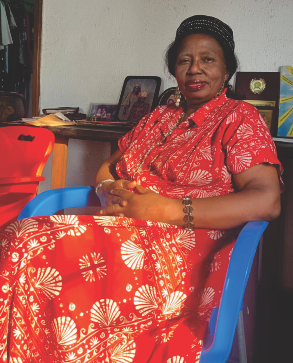
Chief Mrs Bridget Adaku Duru is a woman of many parts, a dedicated worker, society builder, committed to helping lift souls. The ever smiling lady, CHIEF BRIDGET ADAKU DURU-SOCIETY CHANGER was born in Kaduna to Mr. and Mrs. Alphonsus Igweche from Awo-Omamma Local Government Area of Imo State, Nigeria. I was actually born in Kano but my dad fought in the Second World War and came back to marry my mother, a young girl. After getting married to her, he sent her to a convent school in Oguta while he went back to the warfront, later came back and wedded her in July 1956.
We left Kaduna during the Nigerian/Biafra Civil War, after the 1996 coup and came down home to the East. That was the first time we were coming down eastern Nigeria. Since we were born, we never came home and it was interesting because, we knew our village, other relatives and villages around, We were happy to be home. life was not as rosy as it used to be. Because of the way things were during the war, I know that there were raids; airplanes used to come and raid villages and some towns, so we were living in fear. I registered with the Nigerian Red Cross Association and was working with the International Red Cross then at the Awo-Omamma Community Hospital
How old were you then?
I was 17 years old. I was working there and was able to help my family and a lot of people in my community through the relief materials we were being given. However, we were not paid but at the end of every week, they will share food to compensate us for the work we were doing. I will bring it back, my mother will take her own, share with her neighbours and children there. We were able to help them. So most of them did not suffer from kwashiorkor because then, there was no salt anywhere, so it was the stock fish that they used to bring, that had salt on it, and we were distributing to people so that they could have salt in their food. For that reason, many of the children there did not suffer from kwashiorkor.
Before the war ended, I left the Red Cross job and went to Oguta. Before then, my father actually wanted me to marry one – Mr. Barnard Amanfo, the son of our traditional leader, Mr. Amanfo, a very well-known prominent man.
But I was too young. I told my father I wasn’t going to get married, that I wanted to go to school. He said I could always go to school if I get married but I said no. The man was older than me by far and I didn’t have any admiration for him. My father wasn’t very happy. He wanted to be the in-law of a very prominent person.
I told him that I wasn’t going to succumb to that pressure. He said that as long as he was alive, I was going to marry that man. What I did was to pack my things and leave for my grandmother’s place to live with her. I never came back.
Later, we had an occasion in Oguta where I met Mr Samuel Ekezie, a naval officer. We fell in love and before you knew it, the war ended. As soon as the war ended, I went to school at Aba.-Wilcox Memorial Grammar School. I was living with my cousin Jude Ojiakor. Second year, there was no money for school fees anymore and during that time, I had to visit my then boyfriend, Samuel. By the time I came back, I noticed I was pregnant and the man’s family so loved me because he was an only son. His father had four other wives but his mother had one boy and three girls. So they were hoping to get a male child, luckily for them, when I delivered on October 23, 1971, it was a baby boy. The whole village was jubilating. They treated me like a queen; they couldn’t believe that it was happening. Everybody was happy. My mum came for the omugo. Later, everything became normal and Samuel left for Benin to go and work with Mandilas. Then I said I would not be there waiting for him so, I had to come to Port Harcourt through one of my sisters-in-law (May her soul rest in peace), Fanny Ekezie.
Where did you leave the baby?
I left him with my mother-inlaw. She was capable, young and able to take care of my son. I came to Port Harcourt.
At that point, I met one Mr Victor Kolade, a Yoruba man who was working in the Nigeria Agip Oil Company. I told him I wanted to work in Agip, that I don’t want to work in an oil servicing company because I learnt that they pay better than oil companies. After two weeks, he invited me for an interview and, I was lucky. As soon as I went for the interview, the results came and I passed. They employed me. That was how I found myself in the Nigeria Agip Oil Company.
What Year?
That was 1975. I was employed as a typist. I worked for two years-1975-1977 then told them I want to go to the university. While I was working, I sent money and provisions to my mother-in-law to take care of my son and I was helping them. When I said I wanted to go to the university, my parents said I should wait a little bit. I said no there is no time to waste now, that I have the mind to go to school. I went to the university, one Mr. Adeniran, a lecturer with the Rivers State University of Technology now Rivers State University, was instrumental to my getting the admission. What happened was that because I had a merit in Maths and Secretarial Administration, instead of four years HND, they gave me three years. I started from year two-they gave me exemption. And as God may have it, while in school, on long vacations, I would go to Agip to work to be able to earn some money before going back to school. Luckily for me, after the three year programme, I came out with Upper Credit and had to proceed to Lagos for my NYSC. At first they posted me to Jos but I did not want Jos. I wanted Lagos where I would be in the oil company. I went to the NYSC Secretariat in Jos and told them I was married and needed to be with my family and they sent me back to Lagos. When I came back to Lagos, I went to my company. They accepted me and allowed me to serve with them. After the NYSC, they now employed me as a secretary.
So, you joined Agip from Lagos?
I joined them from Lagos, second journey. I was in Lagos from 1984 to 1985 when they transferred me back to Port Harcourt because the company was transferring workers to its new headquarters. I was happy doing my job
As God would have it, I found favour with almost all my bosses. Anybody that worked with me would like to work with me. First, I worked as assistant secretary to the Project Manager, an Italian. When he left, another person took over and he recommended me to the new boss, that he should not allow them to redeploy me but kept me in the department; that I was very efficient. I was there until one day, the operational manager said he needed a secretary and they checked all the secretaries around, I was the only one who had an HND and I knew the job. So they recommended me to work with the operations manager, another promotion for me. I worked with the operations manager for about three years then the General Manager, Mr Sylvester Uwaechie needed a secretary. I don’t know what happened or what the secretary did, they said they don’t want her again. The General Manager just told my boss that he needed me to come and start working with him. That was how I became the General Manager’s secretary and I worked and everything was okay.
When I was working with him I met my husband, Dr Emmanuel Duru in his cousin’s house at GRA. He was a lecturer in the University of Port Harcourt. I went there with my mum to see them while he came to bring back children who went on holiday. My sister in-law, Lolo Victoria Ekezie now told him, ‘This lady is from our place and works with Agip’. As soon as he saw me he got interested in me and we got talking. That was all.
Next weekend he came to my house. I was surprised. I didn’t know he had collected my address from Sister Victoria informing her that he wanted my hand in marriage.
He told me about his life, in Moscow, that his European wife left because she couldn’t cope with Nigeria’s economic situation as she found it difficult to adapt and asked for divorce and he divorced her. He said he wanted to marry me. At that age, I wanted to get married. I said maybe this is the right man. That was October 1987.
You were what age then?
Thirty five (35). He proposed and I accepted. He told me he wanted to go to my village that weekend but I told him to wait till the next weekend when I would accompany him. The next weekend we travelled home and met my father. My father was very happy to meet him, my mother, everybody was happy. He told my father and my uncles that he came to know what it would take to marry me.
He went home and returned two weeks later with his people for a big traditional marriage rite. Everybody was surprised. They never saw me courting, only saw me getting married. They (Dr. Duru’s people) did everything.
Usually, in the Catholic Church, before you get married they have the bans of marriage that will be announced at least three months before you get married. When we came there, I told him that we have to follow the process. He said no, that we can talk to the Bishop. I was saying that even though, I also knew the Bishop, people in the village might say we needed to follow the rule. We went to Bishop Fitzgibbon, Bishop of the Port Harcourt Diocese at that time, who said we didn’t need any ban that we could wed. He used his power and he wedded us on December 19, 1987. That was how I got married to him. For the 25 years of our marriage, we were living peacefully. The marriage was blessed with five children-Chinedu,Nnamdi, Chinenyenwa, Ifeanyi and Nneka. Everything went well until he died in 2012 of leukemia and I had to, after the mourning, answer my son’s invitation to come over to the US for some time. But I was still visiting until I finally became an American citizen. While there, I was doing volunteer works to keep myself busy in order not to be idling about.
You had your first son very early.
At 19.
You must have encountered some pressures?
Eeh, I was able to cope because when you are in an environment where people accept you, it makes life easier. I wasn’t in my home but I was feeling at home. One of the reasons was because my mother-inlaw was very nice. She was a very kind woman who didn’t disturb; she will just say, “Bi, Bi”. My name was just like a household name. They were really nice and I showed interest. When they were going to the farm even though I had never farmed before, I followed them to the farm. I learnt how to farm. All the time we were in the North we never knew anything about farming. They would go to the farm, weed, plant, harvest, peel cassava, come and prepare it for garri. I was adapting to their way of life and that made her to be very happy.
Your being a volunteer during the civil war, what was it like?
It was not easy oo! It was not easy because we had to attend to wounded soldiers and most of them were amputees with their legs up. They will want to use the toilet, they could not get up. You had to get head pan for them, empty and wash it and even in the morning, I would get up, give them a bath, clean them up, make their beds and feed some of them. We used to rotate from ward to ward; sometimes they sent us to the theatre or to go and work in the casualty ward. We were usually on standby in case of emergency.
You were not afraid?
I wasn’t afraid. The only thing was that sometimes, Nigerian fighters used to come and throw bombs. Luckily for us, they never threw bomb on the Nigerian Red Cross.
Where was that?
In Awo-Omamma
That hospital is still there?
Yes it is still there. It is now a general hospital. It was only one day that they threw bomb, not in the hospital, but in the staff quarter near the hospital; one day only. That was the first time. They threw bomb and they killed about three persons. They never came again. They would however, come, hover and hover, sometimes you think they were going to throw bomb but they would not attack the hospital. I am sure they were obeying the international law.
Keeping the civilian spaces safe
Yes.
You were married for 25 years. What things did you learn about marriage from those 25 years?
Well, what I learnt is that for you to be happily married, your husband has to be your friend, your confidante and your husband at the same time. And you must have mutual respect for one another. Like, my husband sometimes, we agree to disagree so we did not have any serious quarrel any day. What I know is that you have to respect one another and you don’t have to allow any stranger into your relationship. Whatever you are having in your home, let it be in your home, don’t go and discuss your affairs with outsiders because you don’t know those who are envying you. Make sure you keep it in your home unless it is something good that you want people to know about.
Anything that is like a problem that you are facing, don’t discuss with anybody. If you must discuss, maybe you have a sponsor in the marriage, you can go to your sponsor to say, ‘Look at what is happening”. Their own is to advise you and guide you and normally, they do it very well. For you to get a sponsor in a marriage is not easy. That person has taken a vow to make sure that that marriage survives and works.
At 35 you had a good job. Usually, you have pressure from parents, society-you never marry? What are you waiting for? What will you tell young women and girls facing that kind of situation?
My advice actually, is this, don’t allow any person to influence you and don’t listen to gossip because when you begin to listen to gossips, you get confused yourself.. Know what you want and go for it because nothing that is good comes easy. You have to give something to get something. That’s my advice and then, you have to respect everybody; don’t think that because you are in a better position now, you can look down on people. No! You have to respect everybody because those you meet when you are going up, you will surely meet when you are coming down. So, anywhere you find yourself, make sure that you have mutual respect for everybody both small and big because respect is reciprocal.
What are your work principles like? .
In the first place, my work principle is punctuality. Agip resumes 7.30 am, but for me, 7.00am, I was in the office. I never recorded coming to work late for one day. Usually, when you come to work late, first of all, they would give you query, it goes into your file. At the end of the year, when they would do your appraisal, it would surface. So, I made sure that I was always punctual at work and when there was need for overtime, I would do the overtime. Know when to say no and when to say yes. Deal diplomatically with a difficult person. Don’t take advantage of peoples’ situations or somebody is looking for your trouble then you go and start fomenting trouble, No! Study those around you, what they like and what they don’t like, respect them and you will find that things will go easily for you.
You had a successful career life. Beyond punctuality what are some of the things that helped you?
Apart from punctuality, I had good relationship with my colleagues and helped bring about some changes to improve our work as secretaries which made them see me as one listening to them and championing their cause.
One problem women have is how to manage work and family. How did you manage leaving to be in the office by 7am meaning that you have to do extra work at home. How did you cope?
Well, I was able to cope because I planned very well. What I did was that first of all, when we got married, my husband was only living with the son. I got a cook because I knew that food is important in the house. I got a very talented and good cook to make sure that as I leave early, before I even get ready, I made sure that there would be food in the house. We planned very well. We sat down and planned the menu for the week and all I needed to do was give him the money. All my husband knew was that whenever he came back, his food was there, Nnamdi came back, he had his food. And to take care of the environment, we had a gardener who was taking care of the compound so, I didn’t have much problem as everything was based on planning. When I had my two other children, we engaged two nannies who took care while I was at work. Everything was in order and luckily for us, the children grew into good children. They did well in their Secondary School Certificate Exam and as God would have it, their elder brother, Chinedu filed for me to become an American resident which was approved. As soon as it was approved, I applied for them and their papers were authorized and the visa was also granted. I took them to America in 2016, they are all there now. Chichi, the girl is now married with two children while Ifeanyi is working in San Francisco Nnamdi is doing well here and married with three children. I have eight good children.
Wow! What will you tell women about building themselves up financially? How did you build?
The only thing I want to tell my fellow women about finance is that once you are in a marriage, let your money be your husband’s money, let your husband’s money be your money. For instance, when my husband met me, I was earning more than him because he was a lecturer. I knew how much they were paid. He showed me his pay slips when he brings it, I just laugh.
So, the good thing is that whatever you have belongs to both of you. Maybe, God is using you to bless the family.
You don’t have to be stingy or for instance, you have a problem to solve financially, you know that your husband does not have that type of money and you have, then you keep quiet. You want him to go and borrow outside? That is not fair now! No, the money is for everybody, as long as you manage it judiciously so that you do not lack.
I know that you have a soft spot for helping people and you even have a charity organization. What is the driving force?
By nature, when I look at you, I can tell whether you need help or not and I don’t have to wait for you to ask me to, I will volunteer what I know I can do for you. Most of the people are receptive, when you give them a helping hand they accept. You know some people may have but will not want to give, rather they want you to beg and some may be in need but will not want to beg. They will say let them die in their poverty.
Tell us about your charity organization
All my life I have always had a strong passion for the needy. When I retired from service, I said, what am I going to do? One mind said business, another said you like helping why don’t you set up an NGO where you will be able to help as many people as possible. I said fine. I discussed this with my husband who said okay if you have the money. I said just support me first. I have made up my mind and that it what I want to do. I consulted my friend Constance. We put our heads together. She actually designed the name-Volunteers for Orphans, Youths and Widows Empowerment, VOYE and to rang a bell. We registered the organization with the Corporate Affairs Commission and started our projects on skill acquisition, health and education matters,, helping the poor. And so far, we have been able to save lives, address infrastructure decay in some community schools, empower over 200 youths and widows for self-reliance. We have also established contacts in Imo, Anambra, Delta States with Port Harcourt as head office. We have been able to use our resources to help the needy as indicated in our objectives and we are working on it.
What are your plans right now?
Right now, the first thing among what we plan to do by God’s grace is to bring some youths and women, empower them as we did before but this time, get experts who can teach them how to acquire skills like soap making, find out what it will cost, pay and they learn this skill very well to help them gain financial independence. Because people are using soap, detergent so if we can get them to learn this skill very well, it will help. Nigeria is a big nation, once you package something like soap-liquid, detergent or tablet- very well, if it is good, people will buy. Then for the children in school, if we are able to offset some of the school fees, and if we have enough money, buy book and distribute to them.
For the widows (most of them are looking for loan) we don’t have enough money for loan but if God blesses us and we get enough money as we are expecting, we will be able to finance some of these widows who, are looking for money to start one business or the other but don’t have the capital. Our focus is on making life easier for the vulnerable ones in society. We must acknowledge those who believe in our cause and have supported us along the line we are grateful and look forward to more resources to enable us do more.
That is a noble cause, changing society from your own end. Well done. It has been a pleasure chatting with you.
Although they will say the party structure, the way the party leadership is, which is not democratic, like now, you have Wike saying he put everybody in office, that doesn’t leave room for others to bring in people, have a voice…
But at least, there is only one Wike in Nigeria and we have 774 local government areas in Nigeria and these 774 LGAs have at least 190 wards! So Wike cannot control all that power. What about the other people? Are they also controlling? Wike is selfish and wicked on his own, just because what he did was not good. You can empower people to become visible but you cannot enslave them. We are not asking of people who will help women and later enslave them. No, there are other people who have helped other men to climb, they have not enslaved them. Some of them (the ones helped) have also been ungrateful to those who put them there. It is a human reaction, but it is not a popular one. There are also people who are grateful. There are people who have looked up to the person that brought them to where they are and they have gone to celebrate them; sometimes they raise a foundation in their names, sometimes they celebrate them when they die. Those things are the ones the media should be portraying so that people will also be encouraged to help others.
Now, the Women Affairs Ministry, what do you think it should be doing to help the women’s cause?
Women Affairs Ministry, should be a melting pot of all the desires, of the actions, all the plans, all the programmes of women in Nigeria. The Ministry of Women Affairs, Abuja should coordinate, collaborate with different state ministries. It should also ensure that the ministries at state level, are not dead, not asleep and should call meetings regularly, collate information from the states regularly. It should have a colloquium of programmes, ideas of outcomes from different states which researchers can also use to tell us about the advancement of women in Nigeria, but, what we see the Ministry doing is, they circulate around Abuja. Today, they are even holding a meeting, they call Edo State person in Abuja, call Delta State person in Abuja, call Cross River person in Abuja and at the end of the day, it is Abuja people that are holding the meeting. These are persons who may not be in touch with the home states. Oftentimes, I go to such meetings, when I get there, before you know it, they say there are five/four people from Edo State. I say, well, only two of us were invited here; they have added other people. Next time when they want to do anything for Edo State, they don’t even need to call us again! They will say abeg, somebody is close by and those are the things that are spoiling the issues.
The political parties are supposed to have gender policies, how do we get them to respect their gender policy?
Advocacy. Through advocacy, strong advocacy. Usually, the political parties don’t put their money where their mouth is in the sense that those policies are there. It was the PDP that started it, APC followed when they won. APC came and only those individuals who read the constitution implement it at their own end. I give you an example, the PDP had a gender policy in their constitution for nomination for participation, it was only in the time of Obaseki in Edo State that he asked for five persons to be nominated either to attend a meeting or to be considered for appointment out of which he would take one or two persons. We insisted that out of the five, two must be women. If every state action persons take their party constitution to implement like that, there will be women almost everywhere. The first time this thing was raised was when Obasanjo in 1999, said he sent messages to all the states to nominate women for minister, there were some states that did not nominate one woman at all-half or more than half of the states did not nominate one woman. It was when he called a meeting of women NGOs that he told us this at Sheraton Hotel. So you find that it is a matter of the individual. The party spirit is different, the individual mentality and mode of operation, is different.
If the chairman of a party will want to call for a meeting and he calls mostly all the men and by the time they even ask one woman to come, now they have one woman as women leader in the meeting of about 12 party officials only one woman is there, what voice does she have? More often than not, that woman is a token woman, she does not have a voice, she cannot even challenge if something is going wrong at the meeting. This has put women in bad light. If women’s aspirations are being considered, she will not say anything so long as she gets her small allowance to get back home from the meeting. Those are the things affecting women.
Since women are mainly the voters in elections, shouldn’t we now use that as a negotiation power before elections to state, if we are supporting this party, this is what we want, this is want we want….
That notion has been mooted a couple of times. Why it has not succeeded is that the people with the ideas don’t have the power for the action. Two of us are activists, we say women, women, we are not going to vote. How do you translate that to a woman who is looking for N2000 to buy foodstuff and she gets it before she leaves her house? How is she going to cooperate with you? Two of us are talking, we don’t have what it takes to put any contribution, so what I have done so far has not been contribution? No food on their tables and we are asking them to make that sacrifice for the women that we would not vote for?
You know, it is a very good idea, like I was talking about one woman who was Speaker here, a couple of times, I raised up the mud in the press to organize a press conference to agitate against her oppressors, but the last one, I have even called agitators both in her party and her opposition party, they were willing to say that as long as she is the one they are oppressing, all of us must come out. We want to organize a small rally in front of the state assembly and I said to her, Aunty, we are almost through with our plan, can you bring money for us to try and buy a few things and also give some women some money to go home? She said no, where would she get money, that that is supposed to be our contributions. Eeh, that should be my contribution? It is when I put my own food allowance to project your cause that you will say I have contributed to it? All the one I have been carrying microphone and crying out and everyone is calling me one man riot squad, I have not contributed?
In another situation they said we should have an all-women political party and that was a farce because, society is not formed like that, given that if you were to form an all-women political party, half of them will not follow the cause of that party. And in my development work, I tried to look at what Shell is doing in their different communities, I came across a cooperative society that Shell was funding. A man was the chairman of the cooperative. A man, as head of an all- women cooperative society?
Why was that?
Well, I was not there; maybe because they didn’t have anybody who is educated, they could not even get an educated female or because they could not trust another woman. Why will a woman like me come and be chairman? Some will say, it is even better we have a man so that we know we dey cooperate. So, you want to understand the mentality of women before you try to go for that kind of motion that says let’s have an all-women political party. If you don’t understand how women work, you will just spend your money for nothing. You can do that, after all that, there are about 18 political parties now, if that are becomes one of them. But to say that the women have risen, until it comes to a point where the local women at the grassroots understand what we are raising at the national, we will not have any followers….They may follow you halfway and drop on the way. That has always been the little fear and a problem.
There have been some suggestions that there is no bridge between the grassroots women and the women at the center, the ones at the state and national level and that affecting what has been done for women inclusion.
That is the fact I have just explained, that we who are raising our voices saying, let’s give women a chance, do this, do that, when the time of election comes, that all these women should support this woman for election. And this other woman who gets N2000 to buy some salt and some rice in her family, after collecting that money, she has a conscience. She now develops the conscience and votes for the person who gave, it will be easy but when some people are still looking for how to feed their children, when politics is still at the primordial level in Nigeria, it is going to be difficult. If the average family is self-sufficient economically, self-reliant, and politicians know this, that was how they won election in Ekiti.
In the last election in Ekiti State, the women were swearing , cursing APC- ‘Alah’, APC no go die well! See all, the suffering!’ ‘Tinubu did this, Tinubu did that,’ APC kept quiet. At the time of the election, they were getting N10, 000. Before you know it, one old woman that had not seen N2000 in her hand for almost a whole year saw N10,000. She called her neighbor, “Why are you still at home? A vote is N10,000!” And before you know it, the result changed in expectation. Even the NGO people who were there said it, that what we were expecting the election to produce is not what it produced. That is the problem.
The major thing is that we need to address poverty.
Poverty! We need to address poverty before democracy can make sense. Democracy will not make sense until everybody has the wherewithal to raise their voices. How can you raise your voice when it is against the person who is feeding your family? These are the issues.
It is a pity. So what will you say to our young girls?
Young girls should know that they have a future, the future ahead of them is in their hands to control. But if they will follow the footsteps of their mothers, and draw back and not fight it out with the boys out, there (the boys will continue. The boys have been trained by their fathers to always push ahead. The girls have not been trained by their mothers.
The mothers have not done anything to train the girls to always push ahead even though there are a few fathers today who wouldn’t mind if their daughter is a governor, or in the Senate. All these need to be taught to our girls so that they will know that if they can aspire, there are some people who will support them.
There are some men who are becoming He-for-She, who are supporting that this problem in Nigeria, but it is getting too long, let’s change and see what a woman can do. There are many men and the number of such men is growing by the day. So, we need to tell the young women that if they are able to push, they will get the support in future.
And to those campaigning for more female inclusion? What are some of the things you think that we need to do which we are not yet
For those of us fighting outside the political ring for women inclusion, we are not well served with the right information. Therefore, we are not using the right information, we are not using the right tools to get our advocacy through. I just gave you an example of zoning, if we don’t understand the zoning in the political realm and we are supporting a woman against the tide, we will say Ooh, our advocacy did not work. So those of us who are outside (that was what took me into politics,) I was still in the activism and they said, go inside. The women were telling me, You are always saying women are not trying, the women are not pushing, they are only dancing, clapping. You, come inside’. I said if you ask me to come, I will come. That was why I entered politics in 2003 and today, what I know in politics with my activism, the person who is the president of one NGO or one international NGO, does not have it.
We need to connect with women who are in politics to understand both the language, the intricacies and the dos and don’ts. Oftentimes, they say we use language that some men don’t like to hear; we need to be sensitive in our language. We also need to be sensitive in our demands and also be sure that what we are asking for is in the interest of the people we are working for. Often, we fight for people without asking them, what do you want? Until we go dig gamu halfway you hear, se no send am, na your side we dey o!.So, there is need for synergy between those who are advocating for inclusiveness outside politics to connect with knowledgeable women in the polity-women who have tried, some have failed, some have succeeded. You need to tap from their experiences, from their wisdom, from their failures before you set your own agenda.
That is very fine because, even in ordinary NGO work, if you go to a community and you decide their problem for them, the objective from Abuja, you may be making a huge mistake. We did not talk about visibility. Let us quickly talk about visibility because we want them to come in but, beyond money and a political party, there are things that women should do for themselves.
In the Asaba meeting, I encouraged women who want to take part in politics to become more and more relevant to the needs of their immediate environment. A woman who wants to be a councilor in a ward, that is the smallest political unit which, is also winnable, must be identified by men and women from the ward for her personal resourcefulness. You may not give them money but you can give them your time. If you don’t have time, you can rally around some people to also provide their time to address their needs and source help for them outside. Once they connect you with one benefit, by the time you print your poster, they will campaign for you. That is what we have seen over the years and we expect that for more and more women to become active in politics, they should first all bend down to carry the load before asking for help so that people will help them to put it on their heads. They must develop themselves, must understand their terrain, must have what it takes, must have the poise-when they appear in public, so that people will be able to respect them. Women must be sociable, respectful-that’s what local people enjoy-respect, integrity, dignity, sensitivity. If you are able to connect with them in that wise, they will project you.
Some elections are won not with money but with connection. Have you not heard sometimes in a whole state, one information will just go round-no, we are not voting for this, this is the person we are voting for? That was how Labour Party won in Edo State (2023).
, because of their movement. The movement came eh, there must be a new Nigeria. In Edo State, the people voted in somebody new in Abuja (NASS). They did not know him, before they knew it, their own people who should represent them at the *home/local spot, were affected, disenfranchised, deselected and so, even the strong political party in the state lost to Labour at the National Assembly and even the presidential elections. And it was difficult to get those things back. It was surprising that somebody in Labour is representing Edo State in the House of Representatives because of one little campaign that went round everywhere.
And, usually, it is those who have access to information that will ride with that kind of information so, if you think that that can also be impactful, do something that will make you popular-try and gain popularity from the people you want to represent, that is, your own self-development and get an education. If you are market woman and you want to go to the council, by the time you are almost getting there, somebody, chairman of the party will go and bring his/her daughter who is a graduate but if you are educated, you can read/write and sign memoranda, they will have nothing against you. So as a woman, self-development is prime to political visibility.
When I teach people how to enter into politics, I advise, go and register with a political party in your wardthat is the first thing. Do you know that most of our people, even the NGO people don’t know their ward? For anyone interested in taking part in politics, know your ward, know the political parties in your ward; know the active political parties not the silent ones that are yet to register. Don’t invest unless your popularity is overwhelming. Don’t risk in joining a weak political party that doesn’t have ** in your state. You will think, ooh, I like the name of the party, let me use that to go and print my poster; I don’t want to be mentioning names. But for you to be visible, joining a party that is already strong and that has a solid structure is better. Attend meetings and at each meeting in your ward, when you are active in the ward, someone will nominate you to attend meetings at the state level. Contribute, discuss, contribute effectively in any meeting in the ward; you introduce yourself and contribute wisely. By the time you introduce yourself four to ten times in one ward, people will get to know you.
Many women come to meetings and as they come, they go. But if as an educated woman an issue is raised, you contribute, when you contribute, the chairman of the party will nominate you when they are looking for who will go and speak for the ward at the state level.-That woman that is always saying something-that is how you become visible. Before you know it, you have become a matter. I the two political parties I have operated, I have been the candidate for national election, I have been the national leader in APC, now national leader in the PDP. When you don’t go to meetings to sleep or look for*coke , boyfriend or whatever, you go there and know what you are there for, you focus, concentrate.
Political parties actually recognize persons who have something to offer
When they say the chairman’s father or other person’s burial is coming up, contribute, nothing is too small. Chairman, I don’t have but nothing is too small, take this N2000.
I think women need to hear this. Women need to contribute, I was told this by late Mrs. Victoria Whyte who said when the PDP was raising fund for the Musa Yar’Adua Foundation and men were putting down N1million, she put in N1million too, gives you a voice. Women can’t keep waiting to be receiving, receiving.
Yes. Occasionally, invest. Politics is about investment. I know there are instances who did not invest harvests; somebody invested to make that happen, it doesn’t come from nowhere. You cannot build something on nothing. You may not be the one who invested but somebody invested before you rode on that investment. On your own, you can invest and benefit. Invest your time, invest your resources, invest also your own integrity and if someone says anything that is contrary to whom you are, stand up for yourself, defend yourself. If you don’t defend yourself, that thing will multiply a hundred times-but you were in that meeting and you didn’t say anything. That is how some women suffer from reproach without defending themselves.
Dr thank you so much for this deep conversation.
It has been my pleasure

Namibia: Inspiring A Continent

The Woman: H/E Senator Ipalibo Harry Banigo, AWLO Life Patroness

Northern Nigeria’s First Female Commodore

THE TORTUOUS JOURNEY TO WOMEN POLITICAL INCLUSION IN NIGERIA

Senator Hadiza Natasha Akpoti- Udaghan, Beacon Of Nigerian Women’s Struggle For Gender Equity And Respect

Welcome
-
 Women & Democracy12 months ago
THE TORTUOUS JOURNEY TO WOMEN POLITICAL INCLUSION IN NIGERIA
-
 Achiever1 year ago
Senator Hadiza Natasha Akpoti- Udaghan, Beacon Of Nigerian Women’s Struggle For Gender Equity And Respect
-
 Reports1 year ago
Welcome
-
 Business & Tech1 year ago
Wife Owns Northwest Petroleum; Husband Owns Providus Bank : THEY MAKE US PROUD
-
 Sports1 year ago
TRIBUTE TO OUR STAR: ESTHER OKORONKWO, JERSEY NO. 6 OF THE SUPER FALCONS
-
 Sports1 year ago
Another Glorious Moment Of Women Strength From D’ Tigresses
-
 Reports1 year ago
When Mothers Celebrate Offsprings’ Success
-

 Achiever1 year ago
Dr. Happiness Ntuenibok: A Passion For Service