
Reports
Refuse To Be Destroyed


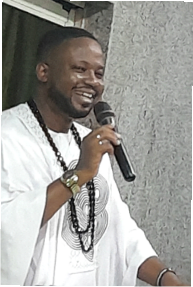
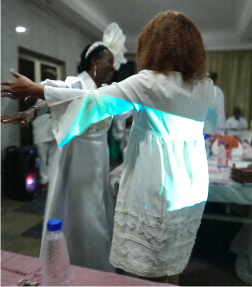 Nothing makes a mother happier than watching her child climb the ladder of success. Comrade Courage Nsirimovu, executive director of Pilex, The Peoples Advocate, a fearless Port Harcourt based human and environmental rights non-governmental organization, recently celebrated in grand style, his 40th birthday drawing dignitaries, colleagues, friends and family to join.
It was with radiant joy that the mother, Mrs. Ijeoma Nsirimovu joined in the celebration and when called up, proudly narrated the journey of his life from infancy through school to his present state. Congratulating him for fulfilling a childhood prophesy and making the family proud, this mother beamed with smiles all through.
Fast rising activist, Comrade Friday Nbani, executive director of Lekeh Development Initiative, an environmental justice campaigner, has for three consecutive years, successfully hosted a Niger Delta-wide conference on climate change, a testimony to his movement-building ability and silent but impactful community work.
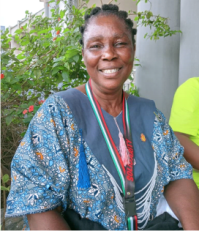
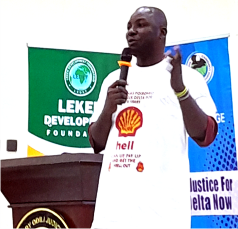 In recognition of this, Kebetkache Women Development and Resource Development Center, foremost women NGO in the region and partner in the recently ended 3rd Niger Delta Conference on Climate Change, which held in Port Harcourt, recognized the contributions of the mother who was personally present all through the one week event that hosted over 300 participants drawn from UK, US, Ghana and Nigeria, cutting across the academia, government and the civil society.
The sense of pride and achievement was evident in her smiles and song as she appreciated God who made everything possible.
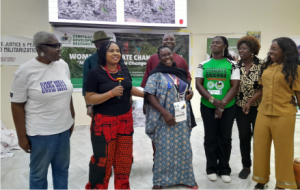
Comrade Friday Nbani and mum (middle) beam as Kebetkache’s team celebrates her.
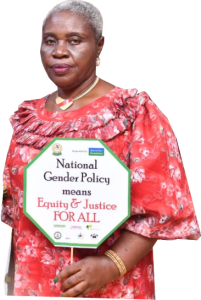 For long has the story of Africa been told without the voices of the women, their labour of love and wisdom, energy and direction, which have helped to shape African societies.
Thirty years after the Beijing Platform recommendations to advance the status of women, I can say we have come of age. Everywhere you look, signs of our presence and contributions are there. Therefore, this is the time to let the world hear our voices, see our faces and hear our story.
AmazonaAfrica is that Platform for the overdue visibility of the African woman; a space to share our experiences and challenges, learn and unlearn. A space to celebrate our successes and plot for more.
Welcome to a new dawn, the dawn of an Africa that recognizes and celebrates our worth.
In the spirit of sisterhood, we will make this journey a lasting success.
Welcome on Board as we showcase the cultural diversity and resilience that makes us unique.
Constance Meju
Publisher/Editor

Namibia: Inspiring A Continent

The Woman: H/E Senator Ipalibo Harry Banigo, AWLO Life Patroness

Northern Nigeria’s First Female Commodore

THE TORTUOUS JOURNEY TO WOMEN POLITICAL INCLUSION IN NIGERIA

Senator Hadiza Natasha Akpoti- Udaghan, Beacon Of Nigerian Women’s Struggle For Gender Equity And Respect

Welcome
-
 Women & Democracy12 months ago
THE TORTUOUS JOURNEY TO WOMEN POLITICAL INCLUSION IN NIGERIA
-
 Achiever1 year ago
Senator Hadiza Natasha Akpoti- Udaghan, Beacon Of Nigerian Women’s Struggle For Gender Equity And Respect
-
 Reports1 year ago
Welcome
-

 Business & Tech1 year ago
Wife Owns Northwest Petroleum; Husband Owns Providus Bank : THEY MAKE US PROUD
-

 Sports1 year ago
TRIBUTE TO OUR STAR: ESTHER OKORONKWO, JERSEY NO. 6 OF THE SUPER FALCONS
-
 Sports1 year ago
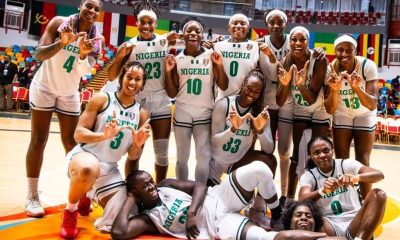
Another Glorious Moment Of Women Strength From D’ Tigresses
-
 Reports1 year ago
When Mothers Celebrate Offsprings’ Success
-

 Achiever1 year ago
Dr. Happiness Ntuenibok: A Passion For Service