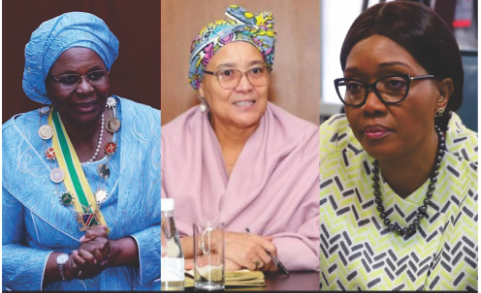
Namibia has made history by becoming the first country in the world where women simultaneously hold the top three leadership positions: President, Vice President, and Speaker of the National Assembly. President Netumbo Nandi-Ndaitwah, Vice President Lucia Witbooi, and Speaker Saara Kuugongelwa-Amadhila have been breaking barriers and setting new precedents for women’s empowerment in Africa. This development marks a significant milestone in Namibia’s political evolution, reinforcing the country’s commitment to inclusive leadership..
The African Commission on Human and Peoples’ Rights has recognized this achievement as a watershed moment in African governance, demonstrating that women’s leadership is not about token representation but about transformational governance. With women holding key ministerial positions, including finance, foreign affairs, health, education, and gender equality, Namibia is being watched globally for its pioneering administration in the African Continent.
However, some critics argue that having women in power doesn’t automatically guarantee gender equality. Despite the historic appointments, the share of women in Parliament has fallen to 33 per cent, prompting calls for a law that obliges political parties to promote equality. Additionally, the appointment of mostly male regional governors has raised concerns about the government’s commitment to systematically pursuing equality.
The positive point is that with this all-female top government leadership, marks a significant milestone in the country’s history and serves as a model for women’s empowerment in Africa.
Positive Impact
Namibia’s leadership model has inspired other African nations to strive for greater representation of women in leadership roles. It demonstrates the government’s commitment to inclusive governance and gender equality even as sister African countries continue to push against bringing women onboard.
This new shift comes with challenges as centuries of barriers from patriarchy deeply rooted in governance are not changes to overcome easily. These include:
Converting political successes into structural progress, addressing violence against women, and ensuring true participation of women in governance remain key challenges
Women’s Representation- Women hold 57 per cent of cabinet positions and 38.5% of seats in the National Assembly, with key ministries led by women, such as finance, health, education, and international relations.
Economic Empowerment: The government has introduced financial instruments to support women-led MSMEs, particularly in sectors like agriculture, tourism, renewable energy, and digital services but despite progress, women, especially in rural areas, still face economic exclusion, limited access to credit, land, and markets, and gender-based violence.
President Nandi-Ndaitwah’s Initiatives
The government is not sleeping. It has set a few initiatives in motion.
Economic Diversification: The president has pledged to boost investments in the agricultural sector and diversify the resource-focused economy to address high unemployment rates.
Green Hydrogen Sector: The administration plans to accelerate policy support and infrastructure to make Namibia a competitive energy exporter.
Free Tertiary Education: The government plans to implement free tertiary education for undergraduate students from low-income households, starting with the 2026 academic year.
Missing links and weaknesses that need to be addressed
Identified missing links and weaknesses that need to be addressed in Namibia’s pursuit of gender equality include:
Limited Economic Empowerment: Women face challenges such as limited access to financial resources, socio-cultural norms, and lack of social protection, hindering their ability to thrive in business.
Inadequate Representation: Despite progress, women remain under-represented in key leadership positions, particularly in sectors like agriculture and regional councils.
Systemic Barriers: Entrenched patriarchal structures and cultural norms continue to hinder progress toward gender equality.
Gender-Based Violence: Namibia still struggles with high rates of gender-based violence, necessitating stronger enforcement of legal protections and community-driven interventions.
Inequitable Access to Opportunities: Women in rural areas face significant challenges, including limited access to education, healthcare, and economic opportunities.
To address these challenges, Namibia needs to focus on:
*Strengthening Policy Implementation*: Ensuring effective enforcement of policies and laws, particularly in rural areas.
*Promoting Economic Inclusion: Providing targeted support for women-owned businesses and financial inclusion programs.
*Addressing Sociocultural Norms: Engaging in community-driven initiatives to challenge and change patriarchal attitudes and norms.
-Increasing Representation: Implementing measures to increase women’s representation in key leadership positions and sectors.
How are the men responding to this all-female leadership?
Men’s responses to Namibia’s all-female leadership have been largely positive, with many leaders and analysts praising the move as a symbol of democratic progress and gender equality. Former Malawian President Joyce Banda praised President Netumbo Nandi-Ndaitwah’s extensive experience, stating that she would bring people together and be a role model for young women. South Africa’s former deputy leader, Phumzile Mlambo-Ngcuka, also expressed excitement about Nandi-Ndaitwah’s inauguration, predicting that she would lead effectively and bring unity ¹.
Some analysts, like Erika Thomas, emphasize the need for national unity and support for the new leadership, focusing on addressing poverty, unemployment, hunger and division. Thomas also notes that the new Cabinet’s selection conveys a message of no tolerance for internal conflict, highlighting the importance of focusing on the nation’s problems rather than petty squabbles.
In terms of specific reactions from Namibian men, there isn’t much information available. However, the country’s political party, SWAPO, has shown support for the leadership, with Nandi-Ndaitwah winning 57.31% of the vote to become the country’s fifth president. The party’s secretary for information and mobilization, Nandi-Ndaitwah has been instrumental in shaping Namibia’s policies, including those related to gender equality.
Men’s responses to Namibia’s all-female leadership have been largely positive, with many leaders and analysts praising the move as a symbol of democratic progress and gender equality.
According to a study on the impact of gender quotas in Namibia, men didn’t show significant shifts in attitudes toward female leaders after the introduction of a 50/50 gender quota policy by the South West Africa People’s Organisation (SWAPO). However, women’s attitudes toward female leaders improved significantly, indicating that increased representation can positively influence women’s perceptions of female leadership.
The African Commission on Human and Peoples’ Rights has also lauded Namibia’s achievement, calling it a “revolution in governance” that demonstrates women’s leadership is not about token representation but about transformational governance. The Commission urges other African nations to emulate Namibia’s example by implementing constitutional reforms to enable women’s leadership, establishing quotas for women’s political participation, and investing in leadership pipelines for aspiring female politicians.
Key Highlights:
– Positive Reception: Men’s reactions to Namibia’s all-female leadership have been largely positive, with praise for the country’s commitment to gender equality.
– Increased Representation: Namibia’s government has made significant strides in promoting women’s representation, with women holding 57% of cabinet positions and 38.5% of seats in the National Assembly.
– Inspiring a New Generation: The historic appointment of President Netumbo Nandi-Ndaitwah and Vice President Lucia Witbooi serves as a powerful example for young African women, showing that leadership is not limited by gender.
In the rural communities, has this new leadership caused some cultural changes with regards to patriarchy?
In rural Namibian communities, the new leadership has indeed led to cultural changes regarding patriarchy. Traditional leaders are now more supportive of women’s rights, and there’s a growing recognition of women’s leadership capacities. For instance, the Uukwambi Traditional Authority has made significant strides in promoting women’s participation in decision-making and leadership. They’ve appointed women to leadership positions and abolished practices like widow chasing and property grabbing, which previously marginalized women.
Moreover, there’s been a shift in societal perceptions, with men becoming more open to women’s leadership. Studies have shown that men who live in villages with female leaders are more likely to support women’s leadership and participate equally in community activities. The Traditional Authority’s
efforts to empower women have also led to increased participation of women in customary courts and community meetings.
So in conclusion, AmazonaAfrica believes that the Namibian female run government is on the right path and fully aware of its need areas. It is recording increased women participation in governance. Women are now more actively involved in decision-making processes and leadership roles in rural communities.
There is a Shift in Societal Perceptions- Men are becoming more accepting of women’s leadership, and there’s a growing recognition of women’s capacities. Harmful Traditional Practices are being abolished. Traditional leaders have abolished practices like widow chasing and property grabbing, which previously marginalized women.
Despite these advancements, challenges persist and entrenched patriarchal structures continue to hinder progress. Sustained efforts are needed to reshape societal attitudes toward gender roles. These should be done through:
– Strengthening Policy Implementation: Ensuring effective enforcement of policies and laws, particularly in rural areas providing training and capacity-building programs for law enforcement agencies, judiciary and other stakeholders can help ensure effective implementation of policies and laws.
– Promoting Economic Inclusion: Providing targeted support for women-owned businesses and financial inclusion programs.
– Addressing Sociocultural Norms: Engaging in community-driven initiatives to challenge and change patriarchal attitudes and norms.
-Increasing Representation*: Implementing measures to increase women’s representation in key leadership positions and sectors. Implementing women’s leadership programs can help build a pipeline of women leaders and provide them with the skills and confidence needed to take on leadership roles.
– Financial inclusion- Increasing access to financial services, such as savings accounts, loans, and insurance, can help women manage their finances and invest in their businesses. Establishing women’s cooperatives can provide a platform for women to share resources, skills, and knowledge, and collectively access markets and financial services.
– Providing training and skills development programs can help women acquire the skills and knowledge needed to participate in the economy.
– Digital literacy: Providing digital literacy training can help women access online markets, financial services, and other resources, and participate in the digital economy.
*Addressing Gender-Based Violence: Providing support services, such as counseling, healthcare, and legal aid, can help survivors of gender-based violence access the help they need.
-Community engagement: Engaging with local communities to raise awareness and challenge patriarchal attitudes and norms that perpetuate gender-based violence is essential to the equality drive.
-Increasing Representation: Providing leadership development programs can help women build the skills and confidence needed to take on leadership roles. Continuous Capacity Building for Women and girls on leadership and governance.
-Mentorship: Pairing women with experienced leaders can provide valuable guidance and support.
-Networking opportunities*: Providing networking opportunities can help women connect with other leaders, mentors, and role models, and access opportunities for collaboration and partnership.
-Addressing Sociocultural Norms: Implementing community-based initiatives can help challenge patriarchal attitudes and norms, and promote a culture of equality and respect.
-Role models and storytelling: Highlighting successful women leaders and role models can inspire and motivate others to pursue leadership roles and challenge societal norms.
Exploring these strategies will impact both rural women and girls, leaving no one behind and stamping a mark that when women lead, nations develop peacefully and sustainably.
What then can we summarize as the key legacy from this leadership shift for the whole of Africa?
The key legacy of Namibia’s leadership shift for the whole of Africa is:
– *Inspiring a New Generation*: The historic appointment of an all-female leadership team in Namibia serves as a powerful symbol of women’s empowerment and leadership, inspiring a new generation of African women to pursue leadership roles.
– *Challenging Patriarchal Norms*: This leadership shift challenges entrenched patriarchal norms and stereotypes, demonstrating that women can lead effectively and make significant contributions to governance and development.
– *Promoting Gender Equality*: Namibia’s example highlights the importance of promoting gender equality and women’s empowerment in leadership positions, which can have a positive impact on development outcomes and democracy.
– *African Solutions to African Challenges*: This leadership shift showcases African women’s capabilities and demonstrates that African solutions can be found to address the continent’s challenges.
The overall message is that Women’s Leadership Matters. Women’s leadership is essential for promoting development, democracy, and gender equality in Africa.
Namibia’s example shows that barriers to women’s leadership can be broken down with determination, hard work, and support. This Namibian leadership shift has the potential to inspire a continent-wide movement for women’s empowerment and leadership.







 Business & Tech1 year ago
 Sports1 year ago
 Sports1 year ago
 Reports1 year ago
 Achiever1 year ago