Connect with us

Reports

Mama Nike, Mama Adire: The Woman Who Refused To Bow

Published

on

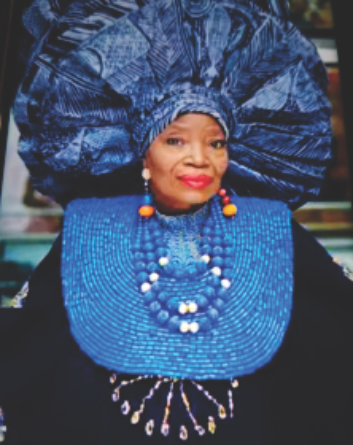
Mama Adire-Mama Nike was one of 15 wives. When she left her husband to make art, the other 14 wives chose to follow her. Artist Nike Davies Okundaye – better known as Mama Nike – grew up in an area of Nigeria, Yoruba land, where polygamous marriages were common. Her own father had three wives.
The women in her family were makers of traditional adire (tie dye) cloth. From the age of six, Mama Nike’s great grandmother, mother, and aunt taught her how to spin, weave and dye.
“I didn’t know it was my own future food,” Mama Nike told BBC News, reason being because, despite her family’s craft, money was scarce.
At the age of 13, her father decided to marry her off to someone who already had several wives. But her great grandmother wanted her to choose her own marriage – and so did Mama Nike. She escaped from the men who had come to take her away, and trekked for five days back to her village.
“It’s the biggest risk I ever took,” she said. “I didn’t care if I died.”
She arrived home exhausted and covered in bee stings. Even so, her father tried to marry her off again. This time, Mama Nike ran away and joined a travelling theatre, until police arrested her and brought her back. Eventually, she agreed to marry a well-known artist and musician from Oshogbo, a town renowned for its artistic community.
She used her sewing and embroidery skills to make costumes for her husband’s band – while trying to make her own art.
“The men didn’t want a woman to be an artist, so, I worked in the night, and worked for them in the day,” she said.
Her husband went on to marry 14 other women. Tradition demanded those who were already wives accept each new marriage – but Mama Nike said they didn’t always want to. On one occasion, the husband took the women to a church where they were denied food, water, or access to their children.
Mama Nike was thus forced to agree to her husband marrying an additional woman: “By the third day we said, ‘bring the wife, we’re not jealous anymore.’ Our mouths were like boards – dry,”.
According to her, living with her husband made her feel “like a lion with no teeth. You have no power.”
She began to teach her co-wives traditional adire making skills, and soon, each of them was able to make their own money.
Sick of her husband’s control and abuse, Mama Nike left him as soon as she’d saved enough to buy her own place – and the other wives chose to follow her.
She opened her first formal gallery in Oshogbo in 1986.
She is now an internationally renowned artist, with a huge gallery in Lagos where she teaches others and makes her own colourful, beautiful art.
Someone who used to play around her studio said Mama Nike rewrote women’s history. She changed powerlessness to power.
“I always adore Mama’s flamboyant gele (hat) back in the days we used to play around her studio.
Believe me, Mama is Art and Art is Mama. The last time I visited her house at Osogbo, I fell in love all over. She challenged the tradition and system. Turned a deaf ear to criticisms, rewrote our tradition thereby making life easier for upcoming female generations. She also won on another hand – married a white man and gave birth to a female child who has also channeled in same trade. A power rare gem,
Sheff nic tal Schauff.
Koni Wendi Bakka described her story as one of resilience. “A story of resilience, one woman liberating 14 others from the fangs of patriarchy,” while for Sandra Lacey, “Women like Mama Nike encourage all women to rise up together to achieve great things.
Precious Hydy would want parents to stop forcing girls into marriage. “Imagine losing her talent and her life before the world ever knew how rare and unique she was. Parents, please stop forcing your children into marriage, especially to strangers”.
Mina Samonas identified with the courage and confidence exhibited by this rare woman.
“I love this. As a woman, you deserve everything good and more and if people are not giving you, you give yourself. You don’t stay and die in frustration, misery and pains. Let what is imbedded in you, sprout out that may take you higher. I love her COURAGE AND CONFIDENCE.I love how she was happy sharing her talents for other people. And I love how the other wives followed her, when she left. Sometimes, you only need one person to guide and save you”.
Mama Nike’s inspiring story serves as a lesson to all women to check within and build up the self rather than die in silence and regret. Every woman has the right to SAY NO TO BAD DECISIONS, BAD SITUATIONS!
Ketshia Aziza captured it thus: “Moral lesson- don’t let man have the final word on your dreams and ambitions. Don’t be afraid to quit and live your life.
Mama Nike’s works of art are display in galleries all over the world.
Source: Outlook: https://bbc.in/4v9xBcM/Facebook comments

Continue Reading
Click to comment

Leave a Reply

Your email address will not be published. Required fields are marked *

Reports

Aderonke Kale: Nigerian Army 1st Female Major General

Published

on

By

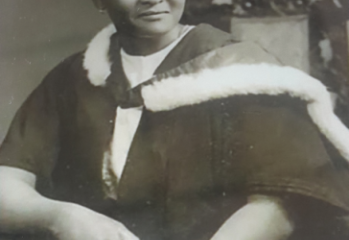
Aderonke Kale became the first woman in Nigeria to attain the rank of Major-General in the Nigerian Army in 1994, about 30 years after the first Nigerian man attained the rank.

Born on July 31, 1939, in colonial Nigeria, into a family that valued education and discipline, Kale’s father worked as a pharmacist while her mother was a teacher, and both ensured that their daughter received a solid academic foundation at a time when few Nigerian girls pursued professional careers.

Her early education took place in different parts of Nigeria. She attended primary schools in Lagos and Zaria, experiences that exposed her to diverse cultures within the country. For her secondary education, she enrolled at St. Anne’s School, Ibadan and later completed her studies at Abeokuta Grammar School, Abeokuta, where her academic brilliance became evident.

After secondary school, Kale gained admission to study medicine at the University of Ibadan, which had earlier been known as University College, Ibadan. She graduated as a medical doctor and soon developed an interest in psychiatry, a field that was still relatively new in Nigeria at the time. Determined to specialize, she travelled to Britain to pursue further training.

Kale continued her medical education at the University of London, where she specialized in psychiatry. After completing her training, she worked briefly in the United Kingdom before deciding to return home. In 1971, she returned to Nigeria, motivated by a strong desire to contribute to the country’s medical and national development.
In 1972, Aderonke Kale made a bold and unusual decision for a Nigerian woman of her time; she joined the Nigerian Army as a psychiatrist. The country had just emerged from the civil war, and many soldiers were dealing with psychological trauma. Her expertise proved invaluable in providing mental health care for military personnel and their families.

Her competence quickly earned recognition within the military medical system. In 1973, she became a Consultant Psychiatrist, and by 1982, she had risen to the position of Chief Consultant Psychiatrist in the Nigerian Army. Her career progressed steadily as she combined clinical expertise with strong administrative leadership.
Between 1980 and 1985, Kale achieved another historic milestone when she became the Commanding Officer of the Military Hospital in Ibadan, the first woman to command a military hospital in Nigeria. She later commanded the military hospitals in Enugu (1985–1987) and Benin (1989–1990), demonstrating exceptional leadership within the army’s medical services.

Her rise through the ranks continued during the early 1990s. In 1991, she became Deputy Commandant of the Nigerian Army Medical Corps and School, and soon afterward she broke another barrier by becoming the first female brigadier general in the Nigerian Army and in West Africa. These promotions placed her among the most senior military medical officers in the region.

In 1994, Aderonke Kale made history when she was promoted to Major General, becoming the first Nigerian woman (and the first woman in West Africa) to attain that rank in the military. She later became the Commandant of the Nigerian Army Medical Corps, placing her in charge of the medical services responsible for the health and welfare of soldiers across the Nigerian Army.

After 25 years of service, Kale retired from the army in 1997. The two-star general was married to Professor Oladele Kale, a renowned scholar of preventive and social medicine, and they had five sons, including Yemi Kale, who served as Nigeria’s Statistician-General from 2011 to 2021.

Major-General Aderonke Kale (rtd.) died on November 8, 2023 at the age of 84.

Continue Reading

Reports

Northern Nigeria’s First Female Commodore

Published

on

By

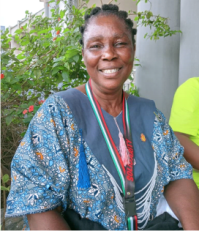
Meet Jamila Abubakar Sadiq Malafa (rtd.), born in 1965 in Whona village in Gombi Local Government Area of Adamawa State. She’s an international maritime lawyer and the first female Northern Nigerian to attain the prestigious rank of Commodore in the Nigerian Navy.

She obtained her Bachelor of Law degree and later earned a Master’s in Constitutional and Criminal Law from the University of Lagos in 2004. Her quest for knowledge led her further to the International Maritime Law Institute in Malta, where she graduated in 2009 with a Master’s in International Maritime Law.

In December 2017, history was made when Jamila Abubakar Sadiq Malafa was decorated with the rank of Commodore, a position equivalent to Brigadier General in the Army. She was later promoted to the Rank of Rear Admiral in December 2022 and retired in March 2023.

Continue Reading

Reports

Refuse To Be Destroyed

Published

on

By

She was 21. He was 61. And when she tried to leave him, Pablo Picasso looked at her and laughed: “Nobody leaves Picasso.” She left anyway and became the only woman who ever did.
Pablo Picasso didn’t just love women. He consumed them. He destroyed them. Literally.

Marie-Thérèse Walter, his lover, ended her life four years after his death unable to exist without him even in memory. Dora Maar, the brilliant photographer immortalized as “The Weeping Woman,” spent years in psychiatric care after he discarded her. Jacqueline Roque, his second wife, shot herself thirteen years after he died.

The pattern was always the same: Picasso found a young, talented woman, devoured her youth, her art, her identity, and painted her obsessively. Then, when he was finished, he moved on.
He called women “goddesses or doormats.” He also called them “machines for suffering.” For decades, no woman escaped him. They either stayed until he left, or they broke trying.

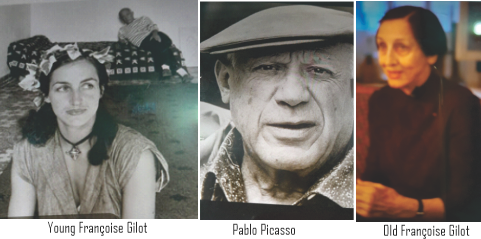
Until Françoise Gilot. Paris, 1943. The city dark, occupied by Nazis, cafés half-empty, tense. In one smoke-filled room, 21-year-old Françoise a painting student with fierce intelligence and fiercer eyes met the 61-year-old Picasso.

He looked at her and said, “You’re so young. I could be your father.”
She met his gaze without flinching. “You’re not my father.”
That was Françoise steel wrapped in grace.

For ten years, she lived in his orbit. She painted. She loved him. She bore him two children Claude and Paloma. He painted her hundreds of times, called her his muse, his “woman who saw too much.”
But Françoise saw the trap.

“I loved him,” she later said, “but I also saw how he needed to destroy the thing he loved most.”
By the early 1950s, the mask had slipped. Picasso once charming, once brilliant had become cruel. He demanded worship, not partnership. Every conversation a struggle, every silence psychological warfare. He pitted her against his other women. Belittled her art. Raged at her independence.

Other women had crumbled under this. Dora Maar had tried to resist and ended up institutionalized. Marie-Thérèse had accepted the role of perpetual mistress, waiting for scraps of attention.

Françoise was different. One morning in 1953, after another night of shouting and manipulation, she stood in their Vallauris villa and faced herself in the mirror. She was 32, but felt ancient. Behind her, Picasso’s paintings covered every wall like watchful eyes.

She turned to him and said quietly, “I’m leaving.”
Picasso laughed. Cold, disbelieving the laugh of a man who had never been refused.
“You can’t leave me. Nobody leaves Picasso.”

She left anyway. Quietly. Packed her things, took her children, and walked out of the villa, out of his shadow, out of his control. No drama. No breakdown. Just the quiet power of a woman reclaiming her soul.

“I wasn’t a prisoner,” she said later. “I came when I wanted to and I left when I wanted to.”
Picasso was stunned. Furious. He tried to destroy her. Told gallery owners across Europe and America never to show her work. Spread rumors she was unstable, ungrateful, nothing without him. “People will never care about you,” he sneered.

But Françoise refused to vanish. She painted. Raised her children alone. Rebuilt her career, gallery by gallery, painting by painting.

In 1964, she published Life with Picasso an unflinching memoir exposing his cruelty. Critics called it vengeful; Picasso’s friends called it betrayal; Picasso himself tried to ban it. Françoise called it freedom.

“I owed the truth to other women,” she said. “So they would know they could survive him too.”
The book became an international bestseller. The world finally saw behind the genius the manipulation, the destruction, the power wielded over the women who loved him.

Years later, she found love again with Dr. Jonas Salk, the virologist who developed the polio vaccine. “Picasso wanted to possess the world,” she said. “Jonas wanted to heal it.” She married Salk in 1970; they remained partners until his death in 1995. With him, she experienced respect, partnership, and love not domination.

Meanwhile, her art flourished. Vibrant, strong, unapologetically hers, her work appeared in the Met, MoMA, Centre Pompidou. Her paintings spoke of survival, resilience, and rebirth.
She became exactly what Picasso feared: remembered for her own brilliance, not his.

Picasso died in 1973 at 91, wealthy and surrounded by art, but alone. Françoise lived until 2023 dying peacefully at 101, outliving him by fifty years. In those years, she painted, taught, inspired, watched her children and grandchildren thrive. She proved that a woman could survive Picasso and emerge not as a footnote, but as a force.

Asked late in life how she found the courage to leave, she said simply:
“Because freedom is the only love worth keeping.”
Picasso painted her face hundreds of times, trying to capture, control, and own her.
Françoise painted her own destiny.

She was 21 when she met the most powerful man in the art world. 32 when she walked away. 101 when she died having spent 70 years proving she was never his muse.
She was always the artist.

Pablo Picasso destroyed every woman he touched. Except one.
Françoise Gilot didn’t just survive Picasso. She walked out of his shadow and into her own brilliant light and stayed there for the rest of her extraordinary life.
Sometimes, the greatest act of creation is refusing to be destroyed.”

– © Ancient History

Continue Reading

Trending